Kristina Boss • Fractional COO
Operations built for the next stage.
I help founders, CEOs and company leaders get out of the weeds by building structure and processes that power the business to run.

“Kristina is a great partner. She cares as much as the owner about making sure the business runs well… if something doesn’t sit right with her, she’s going to speak up. That ethics line is what built trust. Because she held that line, I trusted her with sensitive things.
If we’d brought in someone earlier to help us work on the business and build the structure, it would have taken an enormous amount of stress off us as owners.”
— Dean Austad · CEO & Owner · Good Feet Northwest
Part time or interim COO
Best when the business needs ongoing strategy and senior operational leadership, but does not yet need a full time COO.
Services
How I work with companies.
Defined projects
Scoped pieces of work with a clear start, finish, and outcome. Three to six months, sometimes longer.
Examples of defined engagements
Operational assessment
An honest read of how the business operates today — what's working, what's straining, and where the leverage is. Usually four to six weeks.
Planning system implementation
Long and short term cross-functional goal setting and the operating rhythm to hold it together. Built with the senior team.
Program & initiative development
Designing and standing up a new internal function or initiative — then transitioning ownership to the person inside the business who will run it.
Org & role design
What roles the business actually needs at this stage, how they fit together, and how to move the team into them without breaking what's already working.
Operating & leadership playbooks
The standards, decisions, and routines a team can rely on when you're not in the room — written down, trained on, and built so accountability is possible.
Initiative ownership & execution
Taking direct ownership of a priority initiative and driving it to a result — accountable for the outcome, not just the plan. For the work that needs someone to carry it.
ABOUT
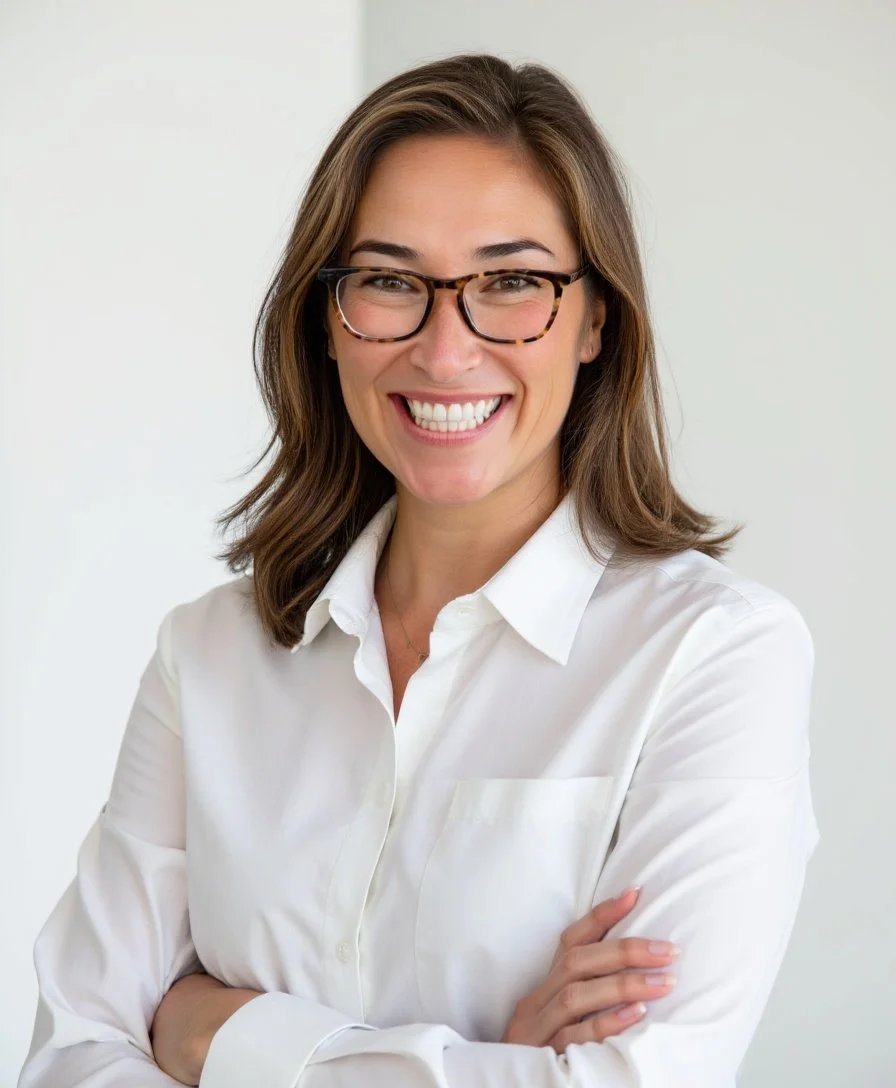
Kristina Boss
Nineteen years leading operations in multi-unit and distributed businesses, based in Portland. I build structure and design systems for the next stage.
Nine years at The Good Feet Store as the ownership team's operations partner — from regional manager to COO, through 7x growth across ten states. Built the planning systems, leadership structure, operating playbooks, and senior team rhythm that let the company scale without depending on the ownership team to hold it together.
Before that, ten years at Walgreens — running initiatives and rollouts, turning around difficult stores, driving business development for new ones, and leading teams of store managers and pharmacists.
Selected Work
What the work looked like.
01 / GROWTH
Scaling a multi-state retailer from regional to ten-state footprint.
SITUATION
A franchise group with six stores in two states. The owners had grown by running from location to location, and had hit the ceiling of what hands-on travel could sustain. They committed to consolidating, then growing again — but only if they could build something that didn't depend on them being everywhere.
APPROACH
I came in as their operations partner. We built the structure in stages as the business grew — planning systems, field and HQ org design, workforce planning, performance and coaching infrastructure, store-opening operations for the field and HQ, financial modeling for both the short and long term needs. Each piece trained and handed off to a team member to own.
OUTCOME
Seven times revenue growth over nine years, across ten states. The operating model scaled with the business and didn't require the owners to be everywhere to hold it together. The franchisor adopted several of the playbooks built during that period into their broader system. I left a team in place that runs without me.
02 / SYSTEMS BUILT & ACQUIRED
A Salesforce platform that scaled beyond the company.
SITUATION
Customer records lived on paper. There was no shared view of the customer, no integration between point of sale and analytics, and no way to scale the customer experience consistently as the company grew.
APPROACH
I led the internal build of a CRM platform integrated with POS and analytics, building the tech stack alongside the team. Quality assurance, release timing, training, and rollout were all built in — so the work that shipped to stores was thoughtful rather than disruptive.
OUTCOME
The business gained one source of truth for customer records — accessible by any store, in any market. That single change enabled structured follow-up, real-time performance visibility, and a consistent customer experience across locations. It also changed what remote management looked like. The franchisor acquired the platform IP. It runs in 300+ locations today.
03 / PLANNING CROSS-FUNCTIONAL
Company-wide planning that aligned the senior team.
SITUATION
HQ departments were working in silos. Each function had its own priorities. There was no shared view of what the company was committing to as a whole, and no system for surfacing cross-functional dependencies before they became problems.
APPROACH
Implemented an OKR-based planning structure across all functions, with cross-functional dependencies rolling up to company objectives. Quarterly on-sites for the senior leader team, structured to look forward and assess current state, with the operating rhythm built around them.
OUTCOME
The business went from activity-heavy to strategically coordinated. Long-term objectives gave every department a shared direction. Quarterly planning cycles translated that into near-term work that moved in the same direction across functions. Cross-functional dependencies became visible early instead of surfacing as late-breaking problems. Beyond the senior team, individual contributors understood what their counterparts were working on — and how their own work connected upward into strategy. They also had a role in planning it and reflecting on whether it landed. The operating rhythm that came out of that process still runs at HQ today.
APPROACH
How I approach business operations.
As a company grows or moves through a transition, keeping everyone aligned on strategy gets harder. Informal touchpoints stop being enough. Meetings multiply. For distributed operations — multiple locations, remote leadership, sometimes multiple layers of management — the alignment problem compounds. The business ends up in a cycle of reaction, and the work that would actually move things forward keeps getting deferred.
I build the operating structure that keeps your departments coordinated and your leadership aligned with where the business is going. Teams understand the strategy and how their work connects to it. Different functions understand each other's role and how their work affects each other's outcomes.
Every function touches the others, so building real operating infrastructure means looking at the whole picture, not addressing one piece in isolation. This doesn't require stopping work or pulling focus from the priorities at hand — it's structure that makes it clearer what work to do, in what order, with the right people responsible for it.
It's built in stages, shaped to your business, with you and your team involved throughout. I'm done when your team is running it, it's held through a few cycles, and the person inside the business who will carry it forward has clear ownership of it.
WHERE I’M MOST USEFUL
Multi-unit and distributed businesses where the operating model isn’t matched to the stage the business is in.
Each function doesn’t fully see how their work connects — to each other or to where the business is going — so effort gets duplicated and the team never operates as more than its parts.
The team has grown and labor cost has grown with it, but the way roles and hiring are structured hasn't been looked at against where the business is now.
Sales and business development both happen, but without the structure to make them consistent — so each leans on individual effort instead of a system the whole team can run.
Performance varies significantly across locations, and there's no reliable framework for identifying what's driving the gap.
The founder is planning to step back or sell, and the business still depends on them in ways a buyer would see immediately — with the systems and reporting not yet built to run without them.
A recent acquisition, merger, or leadership change has left the operating model out of step with how the business now runs.